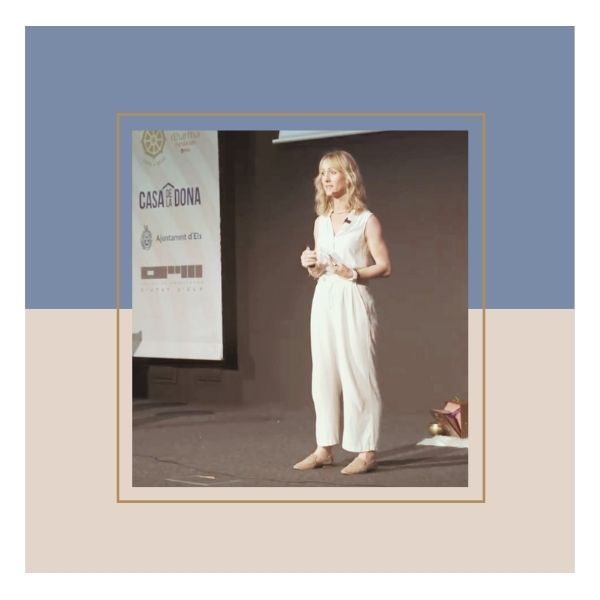
About Maria O'Hara
Psychology, mindfulness and coaching — brought together for the realities of motherhood.
I'm a psychologist and ICF-credentialed transformational coach, working with women navigating the harder, less-talked-about parts of motherhood — the moments where you know exactly how you'd like to respond, and something else happens instead.

Why I do this work
Long before I became a mother, I was interested in how we make sense of our experiences, what shapes the way we respond, and what helps us navigate difficult periods of our lives. That interest led me first to psychology, then mindfulness and coaching — different perspectives I found increasingly valuable when brought together rather than kept separate.
I'm Irish, and these days I call Alicante, Spain home, where I live with my husband and our two sons. Motherhood didn't change what I was interested in, but it changed how I understood it — these questions stopped being something I studied, they something I was living, in the middle of ordinary days that didn't always go the way I'd planned. It stopped being theoretical and became something closer to Tuesday.
It's part of why I've kept training in the years since, and why the work I do with clients has stayed focused on what actually holds up in real, imperfect daily life — not just in theory.

What I've Come to Understand
Knowing what you'd like to do and being able to do it are genuinely different things — in a hard moment, tired and under pressure, the judgement or patience you'd normally draw on can suddenly feel out of reach. Not gone. Just harder to get to, right when you need it most.
A difficult moment can also turn into something heavie than the moment itself. A short-tempered response, a day that didn't go the way you'd hoped — and quietly, it stops being a moment and becomes a verdict on your character, rarely a deserved one.
And not everything is an internal pattern to work on. Sometimes the load itself — the caregiving, the domestic work, the lack of support — is genuinely too much, and no amount of internal work changes that. Knowing which is which matters.
None of this points toward permanent calm, or never reacting badly again. It points toward something more realistic: more choice in the moments that matter, and more ability to act in ways that reflect what you genuinely value.
How I work
My approach draws on psychology, mindfulness, Acceptance and Commitment Therapy and transformational coaching — not as separate techniques, but as different ways of looking at the same difficulty. Together, they help someone notice more clearly what's actually happening: the thoughts, the interpretations, the emotional reactions, the patterns, the pressures, and what genuinely matters underneath all of it. From there, there's more room to choose how to respond.
I also draw on a longstanding background in yoga and mind-body practices, because some of what we carry doesn't fully shift through thinking about it alone.
I'm not working from a fixed idea of how a good mother should think, feel or behave. Some of what a client is dealing with is genuinely internal — a pattern, a reaction, a habit of self-judgement. Some of it is real external load: caregiving, domestic work, lack of support. Better psychological skills don't make that disappear. Part of the work is being honest about which is which.
The M.I.B.A Method
The M.I.B.A. Method brings together psychology, mindfulness and coaching in a practical four-step framework: understanding what’s happening, creating room to respond differently, building what supports you, and acting in line with what matters.

MAP
See what’s happening beneath the pressure.

INTERRUPT
Create space before automatic reactions take over.

BUILD
Strengthen what helps you respond under pressure.

ALIGN
Choose actions that reflect what matters most.
Training & Professional Background
- BSc in Psychology, The Open University
- MSc in Mindfulness-Based Interventions, Universidad Complutense de Madrid
- Advanced training in Mindfulness-Based Stress Reduction (MBSR), Brown University
- Training in Acceptance and Commitment Therapy (ACT) -Pesi continuing education for mental health
- Transformational Coaching - Animas Centre for Coaching
- Vinyasa and Hatha Yoga Teacher Training - Intituto Europa de Yoga
- Sound Therapy - British Academy of Sound Therapy


In practice, working together tends to feel less like being handed a plan and more like thinking something through properly with someone who's genuinely curious about your specific situation — not the general case, yours.
I'm led by what matters to you, not by any fixed idea of what a good mother looks like. That usually means slowing down to look closely at a pattern together, and sometimes gently questioning an assumption you hadn't noticed you were carrying. It's collaborative throughout — we work things out together, at a pace that gives something room to shift, rather than just be discussed.

Sarah T., Working Mum of Two
Using this Method gave me permission to slow down without guilt. I used to think self-care was selfish and unnecessary — now I know it's what keeps me showing up for everyone I love.

Emma L., Teacher & Mother
Maria helped me see that I wasn't broken, just burned out. Within weeks, I had tools I could actually use when my kids were melting down or work was overwhelming. I finally feel like myself again.

Jen M., Writer & Mother
I was skeptical at first, but Maria's approach is so practical. No fluff, just real strategies that work in real life. After the toolkit, I then moved onto coaching to work at a deeper level. It's been transformational.